The Season We Thought Would Last: A Love Letter to Carsyn
Carsyn Neille Davis
January 28, 2013 – June 4, 2013
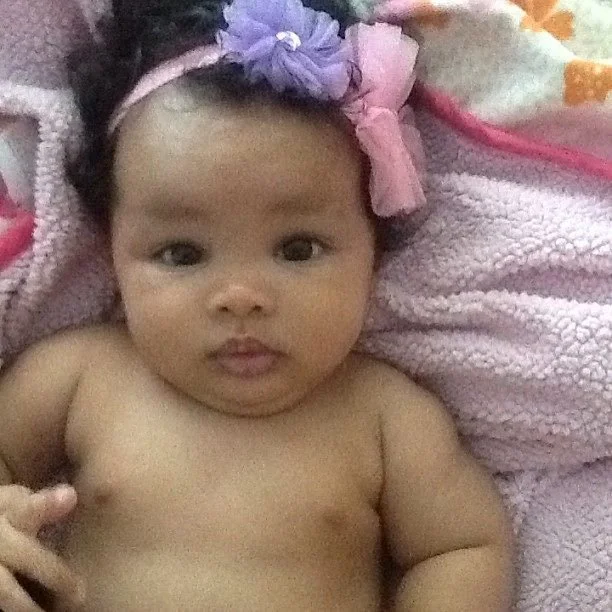
There are some stories you remember in scenes.
Not because you remember every detail, but because certain moments become permanently etched into you, the way the light looked, the sound of someone's voice, the weight of a baby in your arms.
Carsyn's story is like that for me.
I don't remember every day.
I remember the moments.
And when I put those moments together now, years later, I can see something I could not see then:
We were living a whole life.
We just didn't know how short it would be.
Carsyn Our Baby
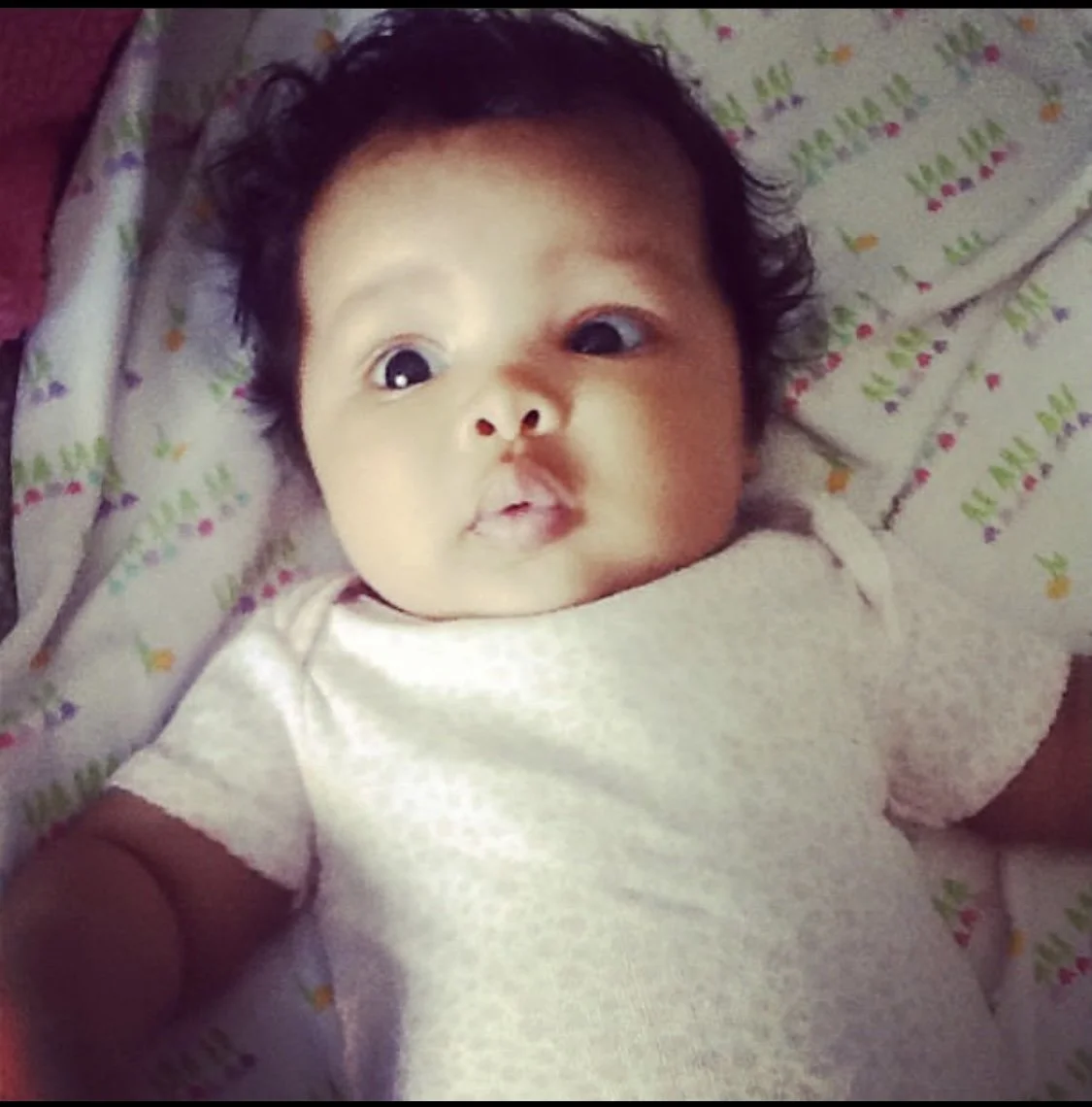
Carsyn Neille Davis was born on January 28, 2013.
She was my baby.
Our baby.
Jeff and I had our family, our girls, our routines, our ordinary chaos, and then Carsyn arrived and somehow made the whole house feel different.
She was tiny.
She was beautiful.
She was loved before we ever knew what losing her would feel like.
And like most new mothers, I was trying to figure out how to protect her.
In our culture, there is an understanding that mothers and newborn babies stay close to home for a while.
You let the mother heal.
You keep the baby away from too many people.
You protect them from germs.
You settle into this new life quietly.
But Carsyn didn't seem interested in staying home.
She went everywhere.
There are pictures of her at the beach.
Carsyn went to Disneyland.
She went to lunch with friends.
People came to visit her at the hospital.
She was carried around and loved and introduced to the world.
She was only a few months old, but she had already begun to live.
And I think that matters.
Because when I look back now, I don't see a sick baby waiting for something terrible to happen.
I see a baby living.
I see a mother who believed there would be more pictures.
More beach days.
More lunches.
More Disney trips.
More birthdays.
More everything.
I thought I was documenting the beginning of her life.
I didn't know I was documenting so much of all there would be.
When Carsyn was born, Jeff and I had the opportunity to enroll in health insurance through work.
We were exhausted.
There was paperwork.
Forms.
Choices.
Plans.
And somehow, in the middle of being new parents again, we decided we would just wait until the next year.
We didn't have time to deal with it all.
We thought we had time.
That sentence would haunt me in ways I could never have imagined.
We thought we had time.
Of course we did.
She was a baby.
She had just gotten here.
Four and a half months felt like forever.
Forever is a dangerous word when you don't know how little time you have.
Carsyn received her vaccines.
That day, she went to lunch with friends.
I remember her sleeping through much of it.
She was a baby.
She had been vaccinated.
She was tired.
Nothing about the day felt like an emergency.
That night, she threw up everything I had breastfed her.
I wasn't immediately afraid.
Babies throw up.
Babies have upset stomachs.
She didn't really have a fever.
By the next morning, she seemed better.
So we kept going.
By lunchtime, she had thrown up again.
I called Jeff.
I called the doctors.
I was told it was probably nothing serious.
Maybe a bug.
Maybe she was dehydrated.
I kept breastfeeding her.
I watched her.
I waited.
That afternoon became evening.
And that night, she threw everything up again.
This time, I knew something wasn't right.
We called the emergency line and made an appointment with her pediatrician.
We went in.
Her pediatrician examined her carefully.
Her head.
Her eyes.
Her ears.
Her legs.
Her stomach.
Everything that should have been checked was checked.
Maybe she was dehydrated.
We were told to keep breastfeeding.
Give her some Pedialyte.
Watch her.
So we went home.
And we watched.
The days that followed became a cycle.
Home.
Doctor.
Hospital.
Home.
Again.
And again.
Carsyn was becoming more dehydrated.
Eventually, we took her to an emergency room.
The hospital didn't have a pediatric department.
We waited for hours.
It felt like we had been forgotten.
We were terrified of losing our place in line, so eventually we were transported by ambulance to Rady Children's Hospital.
And there, they tried to get an IV into my baby.
They couldn't find a vein.
They poked her.
Again.
And again.
And again.
She was so dehydrated that her tiny veins were collapsing.
I watched.
I watched them try to save her.
And I watched my baby endure pain while we were all trying to figure out why she was so sick.
Eventually, I couldn't watch anymore.
I told them they couldn't keep poking her.
No more.
That night, I breastfed Carsyn in the hospital.
They gave her Pedialyte.
We were told to give her small amounts.
Keep breastfeeding.
Try to keep something in her.
Eventually, we went home.
We had spent the night in the hospital.
And the next morning, we took our baby home again.
Still believing she would get better.
That day, Carsyn slept.
But I began noticing something I could not explain.
Her eyes.
She wasn't seeing.
I would breastfeed her and lie beside her.
If I moved quietly, she would panic.
If I called her name, she would turn toward my voice.
So I tested her.
I threw a ball.
I watched her eyes.
I turned on Little Baby Einstein.
Before, the colors and movement would catch her attention.
Now they didn't.
I turned up the volume.
Then she looked.
Sound was reaching her.
But something was wrong with her vision.
I told Jeff.
By this point, he was exhausted.
We were exhausted.
We weren't sleeping.
We were constantly going back and forth to the hospital.
Everyone was tired of being worried.
People were reassuring us.
She was okay.
Nothing was wrong.
She was sick.
She was dehydrated.
She would be fine.
But something inside of me would not settle.
I knew my baby.
And I knew something was wrong.
We took her back to the pediatrician.
Again, she was examined.
Again, we were told she was okay.
But I couldn't let it go.
I showed Jeff.
I made him look.
I made him watch her.
And eventually, he saw what I was seeing.
Carsyn wasn't seeing the way she had before.
So we went back to Rady Children's Hospital.
This time, I was determined.
I explained everything.
The vomiting.
The dehydration.
The repeated hospital visits.
The changes in her vision.
And somewhere along the way, I was dismissed as a "Google mom."
I remember that.
Because I wasn't trying to be a doctor.
I was trying to be her mother.
There is a difference.
I wasn't searching for a diagnosis.
I was searching for someone to believe me when I said:
Something is wrong with my baby.
Then a nurse heard about Carsyn.
She came into our room because she had overheard someone talking about her and wanted to examine her herself.
She looked at my daughter.
And she listened.
Really listened.
She saw something.
Something was wrong.
She got Carsyn a CAT scan.
And suddenly, everything changed.
And so it Begins..
The scan showed a large mass on Carsyn's brain.
A tumor.
A large tumor.
The words felt impossible.
My baby had a brain tumor.
How could a baby have a brain tumor?
How could the child who had been at the beach days before now be lying in a hospital room with a mass inside her head?
The MRI gave us more information.
The tumor was large.
There was concern that the disease had spread down her spine.
Her brain was under tremendous pressure.
The fluid surrounding her brain was not draining the way it should because of the swelling and the tumor.
Her eyes were bulging and being pushed downward.
That explained what I had been seeing.
I had been right.
Something had been wrong.
I just didn't know how wrong.
They needed to relieve the pressure.
Carsyn was put under.
She was asleep.
They drilled into her head to drain the fluid.
And while she was under, Jeff and I sat there with her.
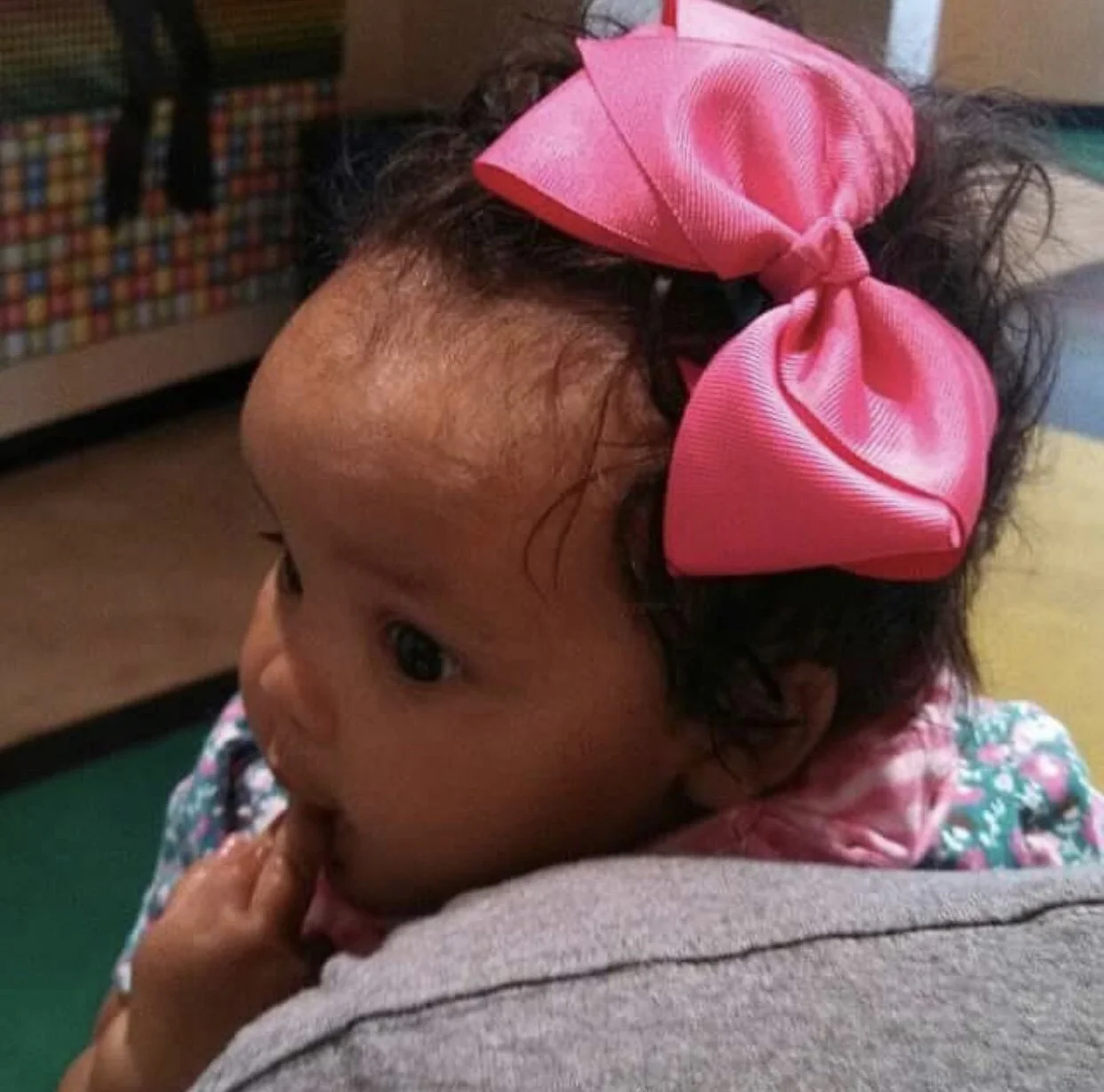
She had her little curls.
Her little body.
Her little face.
I remember being beside her and still thinking of her as my baby.
Not a tumor.
Not a diagnosis.
Not a case.
My baby.
Then we met with the pediatric neurologist.
He explained what they had found on the MRI.
He told us that Carsyn had a large brain tumor.
And then he told us what would happen next.
She was going into surgery.
For a biopsy.
A biopsy.
That was what we understood.
They needed to determine exactly what type of tumor she had.
That was it.
At least, that was what we were told.
We were going to find out what kind of tumor it was.
Then we would know what we were fighting.
Then there would be a plan.
There would be treatment.
There would be another day.
There had to be.
We left the room after speaking with the neurologist.
And while we were gone, they took Carsyn.
We didn't get to say goodbye.
We didn't know we were leaving her for the last time.
That detail has stayed with me.
Because if I had known, I would have gone back.
I would have kissed her.
I would have held her.
I would have told her everything.
I would have stayed.
But we didn't know.
We thought we were coming back.
So we waited.
And waited.
I called my prayer warriors.
Jenny Steele, Julia Pearson, Kris Ekwueme, Jennys Schneider, Ashley Hathaway, Joanna Balisican, Olivia Fitzpatrick, Crystal Cason, Gabby Abbott, and my Mommy.
I asked everyone to pray over Carsyn.
Pray over her surgery.
Pray that God would protect her.
Pray that she would come back to us.
While we waited, I found myself in the hallway praying with other parents.
Other families were waiting for their children too.
Other parents were staring at doors.
Other mothers were trying to be strong.
I spoke life into them.
I prayed with them.
I encouraged them.
And all the while, I believed someone was going to bring my baby back.
Then they called us into a room.
A small room.
We didn't understand what the room meant.
We had never been in a situation like this before.
We didn't know what rooms like that were for.
We thought maybe they were going to bring Carsyn there.
Maybe the doctors were going to update us.
Maybe they needed to explain something.
We waited.
Then the door opened.
There were doctors.
And an anesthesiologist.
And I remember her.
A small Asian woman with dark hair.
But first, the surgeon spoke.
He walked in and said:
"Welp, the child did not make it."
Those were his words.
There was no preparation.
No softness.
No pause for us to understand.
Just:
The child did not make it.
At first, it didn't register.
And then the anesthesiologist came through.
She was crying.
She pushed past the doctors.
She came down toward Jeff and me, crying and telling us that she had tried everything she could to save Carsyn.
She kept saying it.
She tried everything.
She tried everything she could.
And that was when we understood.
Our daughter was dead.
I don't remember every sound that came out of me.
I don't remember every word Jeff and I said.
There are pieces of that moment that I can reach and pieces that I cannot.
But I remember Carsyn.
They let us see her.
Her head had been opened during surgery.
There was a dressing covering it.
There was blood and fluid.
They told us to be careful with her.
But none of that mattered.
She was still my baby.
Her body was warm.
She looked like she was sleeping.
So I held her.
Jeff held her.
My mother held her.
And for the last time, we held our daughter.
There was no miracle.
No waking up.
No bringing her back.
Just the unbearable truth that the baby we had walked into the hospital with would not be walking out with us.
And then we left.
Her blankets.
Her things.
Her empty car seat.
That car seat.
I don't think anyone can explain to you what an empty car seat feels like until you have carried one out of a hospital without your child.
We walked through the hospital.
Into the parking structure.
Into the car.
And somehow, the world was still happening.
People were driving.
People were going to work.
People were laughing.
People were living.
And we were leaving the hospital without our daughter.
I have been told that I blacked out and fainted in the parking lot.
I don't remember it.
But I remember being asked to pay for parking.
And I remember thinking:
How can you ask me for parking money right now?
My daughter just died.
There should be another system for this.
There should be a pass for this.
There should be a different door for parents who have just lost their children.
There should be something in the world that understands:
You are not supposed to have to pay for parking when you leave the hospital with an empty car seat.
But there wasn't.
So we paid.
And we drove home.
The Drive Home
The drive home was long.
Or maybe grief makes every mile longer.
Jeff and I cried.
Sometimes we talked.
Sometimes there was silence.
And eventually, the question came:
How do we tell the girls?
How do you tell a five-year-old that her baby sister died?
How do you explain death to a child who was still learning what life was?
How do you tell a little girl who had finally become a big sister that her baby was never coming home?
We drove home carrying that question.
And when we arrived, Camryn and Casey were there.
They were waiting for Carsyn.
So we sat them down.
And we told them that Carsyn had been very sick.
We told them that Jesus came to the hospital to get her.
And that she now lived in heaven.
Camryn became quiet.
She processed.
She was five, but something in her seemed to understand that this was bigger than any explanation we could give her.
Casey broke.
She screamed:
"I just want my baby!"
"Where's my baby?"
She said it for nights afterward.
I just want my baby.
Where's my baby?
She had finally become a big sister.
And then she lost her baby.
It was unfair.
It was completely unfair.
And Camryn responded differently.
She became a comforter.
Even at five years old, her instinct was to comfort the people around her.
Her mother.
Her father.
Her sister.
Our family was shattered, and somehow this little girl decided she needed to help hold everyone else together.
A Story So Wrong
Then came another wound.
The hospital lost Carsyn's body.
We waited.
And waited.
Enough time passed that we could no longer have the autopsy we had hoped for.
And when the death report came back, it told a story that wasn't ours.
It called Carsyn a boy.
It said the surgery had been successful.
It said she came home.
It said she became infected at home.
It said we brought her back.
It said they tried to save her.
It said that was how she died.
That wasn't what happened.
That wasn't our daughter.
That wasn't our story.
A piece of paper had reduced her life to a series of medical statements, and even those statements were wrong.
But I knew what happened.
Jeff knew.
Our girls knew.
Our family knew.
The people who prayed knew.
And God knew.
Carsyn was not a boy.
She did not come home after a successful surgery.
She did not die from an infection we caused.
She did not die because her parents failed her.
Her mother was watching.
Her mother was asking questions.
Her mother kept saying something was wrong.
And she was right.
Eventually, we learned what the tumor was.
AT/RT.
Atypical teratoid/rhabdoid tumor.
A rare and aggressive brain tumor that occurs primarily in very young children.
Carsyn was four months old.
Four months.
She had barely begun her life.
And yet this disease had already taken up so much space inside her tiny body.
It had been growing while we were taking pictures at the beach.
While we were going to Disneyland.
While she slept through lunch.
While I breastfed her.
While her sisters loved on her.
While we believed we had time.
That is one of the hardest things to accept about cancer.
It can exist inside a body while the rest of the world looks completely ordinary.
You can be laughing in a restaurant while something terrible is happening inside the child you love.
You can take a picture while disease is growing.
You can kiss your baby's forehead and have no idea what is happening beneath the surface.
And then one day, everything you thought you knew about your life changes.
A Legacy for Carsyn
For a long time, I didn't know what to do with a story like this.
How do you carry a child who died?
How do you mother someone who is no longer physically here?
How do you explain a life that was so short but left such a large absence?
There is no answer that makes it okay.
No sentence beautiful enough.
No explanation complete enough.
No theology deep enough to make an empty car seat feel full again.
There is only love.
And grief.
And memory.
And the responsibility of carrying forward the life of someone who cannot carry it herself.
That is what I have come to understand about Carsyn.
Her life was short.
But it was not small.
She lived.
She was born.
She was held.
She was breastfed.
She traveled.
She went to the beach.
She went to Disneyland.
She was surrounded by people who loved her.
She had sisters.
She had a father.
She had a mother who knew her.
She was prayed over.
She was fought for.
She mattered.
And she still matters.
The moment that changed me forever was not simply losing Carsyn.
It was everything that happened before we lost her.
It was being the mother who kept saying:
Something is wrong.
It was being dismissed.
It was being called a Google mom.
It was watching my baby's vision disappear and knowing that something was happening inside her that no one else seemed to see.
It was finally finding someone who listened.
It was discovering a massive tumor.
It was realizing that my mother's intuition had been trying to tell me the truth before anyone else could.
And it made me understand something I would carry for the rest of my life:
Families deserve to be heard.
Children deserve to be protected.
Parents deserve to be taken seriously.
And the spaces where children heal should be designed with their whole lives in mind, not simply their diagnosis.
That realization would eventually become something larger than grief.
It would become purpose.
The Carsyn Neille Foundation was born from that purpose.
Not because a foundation could replace my daughter.
It can't.
Nothing can.
Not because building something could erase what happened.
It can't.
But because I refused to believe that her life was supposed to end with a hospital room.
I refused to let the final chapter of her story be:
The child did not make it.
Carsyn was more than the child who didn't make it.
She was the baby who went everywhere.
The baby with the little curls.
The baby who slept through lunch.
The baby who saw the beach.
The baby who went to Disneyland.
The baby who had sisters who adored her.
The baby her mother knew was sick before anyone could explain why.
The baby who was deeply, completely, fiercely loved.
And because of her, I began to see the work differently.
A child's environment matters.
A family's environment matters.
What surrounds a sick child matters.
What a family breathes, touches, sleeps on, cleans with, builds with, and brings into their home matters.
And so Carsyn's story became the beginning of a larger question:
What if we could help families create spaces that support healing, wellness, and life?
What if grief could become stewardship?
What if memory could become action?
What if one little girl's life could help another child have more time?
That is where Carsyn's legacy began.
The Season
I still think about the mother I was when Carsyn was born.
She didn't know.
She didn't know that the baby she carried everywhere would only be here for a season.
She didn't know the beach photographs would become sacred.
She didn't know Disneyland would become part of a memory archive.
She didn't know the lunch with friends would become something she would one day remember in detail because her baby slept through it.
She didn't know the health insurance decision would become something she would replay in her mind.
She didn't know.
And I want to tell that mother something now.
You didn't know.
And you were never supposed to know.
You were supposed to believe your baby would live.
You were supposed to plan for next year.
You were supposed to take pictures.
You were supposed to make memories.
You were supposed to think there would be more.
Because that is what mothers do.
We love our children as though forever is guaranteed.
Maybe that is one of the most beautiful things about motherhood.
We love without knowing the ending.
Carsyn died on June 4, 2013.
But that is not where her story ends.
Because a life is not measured only by how long a person stays.
Some lives are measured by what they awaken in the people who loved them.
Carsyn awakened something in me.
A responsibility.
A calling.
A determination to listen more carefully.
To build differently.
To advocate differently.
To care differently.
To create spaces where children and families can thrive.
Her life became the seed.
Her memory became the stewardship.
Her absence became the reason I keep building.
There are still days when I wish I could go back.
Back to January 28.
Back to the first time I held her.
Back to the beach.
Back to Disneyland.
Back to lunch.
Back before the vomiting.
Back before the hospital.
Back before the MRI.
Back before the word tumor.
Back before AT/RT.
Back before the operating room.
Back before the small room.
Back before the door opened.
Back before the surgeon said:
"Welp, the child did not make it."
I would go back.
Not to change the ending.
I would go back simply to hold her longer.
To memorize her.
To kiss her.
To tell her how much she was loved.
To tell her sisters how much they would always be her sisters.
To tell Jeff that this little girl would change us forever.
To tell myself:
Pay attention.
This is your season.
This is your baby.
This is your whole world.
I thought Carsyn's season would last longer.
It didn't.
But it was full.
And I have learned that fullness and length are not the same thing.
Carsyn's life was not long enough.
It was never going to be long enough.
But it was hers.
And it was ours.
A season of beach days.
A season of Disneyland.
A season of breastfeeding.
A season of sisters.
A season of tiny curls.
A season of photographs.
A season of love.
A season that began on January 28, 2013.
A season that ended on June 4, 2013.
A season that changed the rest of my life.
So this is my love letter to you, Carsyn.
My daughter.
Our daughter.
The little girl who went everywhere.
The little girl who lived.
The little girl whose life was short but never insignificant.
The little girl whose mother knew something was wrong.
The little girl whose story was written incorrectly on paper but correctly into the hearts of everyone who loved her.
You were here.
You were loved.
You are remembered.
And you are still giving us something.
Still teaching us.
Still calling us forward.
Your life did not end in that hospital room.
That was only where your earthly season ended.
The rest of your story—
the part that lives in your sisters,
the part that lives in your father,
the part that lives in me,
the part that lives in every family we serve,
the part that lives in every child whose space becomes a little healthier because your name came first—
that story is still being written.
And maybe that is what I understand now that I couldn't understand then:
I thought I was losing my daughter.
I didn't know I was being entrusted with her legacy.
Carsyn was here.
Carsyn was loved.
Carsyn mattered.
And because she lived, we will keep building for life.